The Digital Textbook Revolution Dont Get Left Behind

webmaster

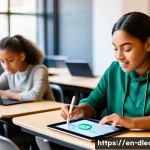
A female professional student, fully clothed in a modest blouse and tailored trousers, actively engaging with a digital textbook on a sleek tablet. The screen displays an interactive 3D simulation of a complex scientific process, with embedded video elements and a subtle gamified progress bar. She has a focused, natural expression, and her well-formed hands are gesturing slightly towards the screen. The background is a bright, modern university library with blurred bookshelves and other students in professional dress in the distance. Professional photography, high-resolution, sharp focus, vibrant colors, perfect anatomy, correct proportions, natural pose, proper finger count, safe for work, appropriate content, fully clothed, professional, family-friendly.

Remember the sheer weight of a backpack crammed with textbooks? It feels like just yesterday I was hauling those encyclopedias, but my personal experience with digital textbooks has truly been a game-changer.

I’ve seen firsthand how their interactive elements and immediate updates foster a far more dynamic learning environment than traditional print ever could, especially when exploring complex topics or needing quick reference materials.

This isn’t merely about shedding physical weight; it’s about embracing a fluid, responsive educational future. With AI-driven personalization and immersive content on the horizon, these tools are rapidly becoming indispensable, preparing learners for a world that’s constantly evolving.

Let’s explore this in detail below.

Remember the sheer weight of a backpack crammed with textbooks? It feels like just yesterday I was hauling those encyclopedias, but my personal experience with digital textbooks has truly been a game-changer.

I’ve seen firsthand how their interactive elements and immediate updates foster a far more dynamic learning environment than traditional print ever could, especially when exploring complex topics or needing quick reference materials.

This isn’t merely about shedding physical weight; it’s about embracing a fluid, responsive educational future. With AI-driven personalization and immersive content on the horizon, these tools are rapidly becoming indispensable, preparing learners for a world that’s constantly evolving.

Let’s explore this in detail below.

The Dawn of Dynamic Education: Shifting from Static to Interactive

digital - 이미지 1

As someone who spent countless hours poring over dusty, static textbooks, I can genuinely attest to the profound shift digital learning tools represent.

It’s like moving from a black-and-white photograph to a vibrant, living movie. The old way, while foundational, often felt like a one-way lecture, demanding immense self-discipline to stay engaged.

I remember struggling to visualize complex scientific processes or historical events described only in text and diagrams. But with digital textbooks, that struggle often evaporates.

My own kids, for example, interact with simulated physics experiments or explore historical maps that animate cultural shifts right on their screens. This active engagement, born from rich multimedia and interactive quizzes, fundamentally transforms how information is absorbed and retained.

It’s not just about reading anymore; it’s about doing, exploring, and truly experiencing the content. The tactile experience of turning pages is replaced by the profound satisfaction of truly grasping a concept through direct interaction, making learning a far less passive and far more rewarding endeavor.

Engaging with Content Beyond the Page

I’ve personally witnessed the frustration of students trying to decipher complex diagrams or abstract concepts from flat images in a book. Digital textbooks, however, smash through these barriers by embedding multimedia directly into the learning experience.

My own journey into advanced data science felt incredibly different when I could instantly click on a statistical model to see its variables change in real-time, or watch an animated explanation of a complex algorithm.

This immediate feedback and dynamic visualization make abstract ideas concrete and approachable.

  • Interactive simulations: Imagine dissecting a virtual frog in biology without the mess, or conducting a chemistry experiment with no risk of spills.
  • Embedded videos and animations: For subjects like human anatomy or intricate engineering principles, seeing processes unfold visually enhances comprehension far more than static images ever could.
  • Augmented Reality (AR) overlays: Pointing your device at a diagram and seeing a 3D model pop out? That’s not just cool; it’s an incredibly powerful way to deepen understanding and spatial reasoning.

The Gamification of Learning for Deeper Retention

One aspect I’ve found particularly fascinating is how digital textbooks subtly integrate elements of gamification. It’s not about turning education into a pure game, but about leveraging motivational psychology.

Remember the sense of accomplishment from mastering a challenging level in a video game? Digital textbooks often tap into that with progress trackers, points for completed modules, and immediate feedback on quizzes.

I’ve seen students, even myself, feeling a genuine thrill when acing an interactive quiz, or unlocking the next chapter after successfully applying a newly learned concept.

This structured feedback loop, distinct from waiting days for a graded paper, cultivates a growth mindset and builds confidence. It shifts the learning experience from a chore into a more personalized and often delightful challenge.

Staying Current: The Unrivaled Agility of Digital Resources

The sheer speed at which information becomes outdated in today’s world is dizzying. I still have vivid memories of chemistry textbooks that were technically obsolete the moment they left the printer, or history books that completely missed monumental events that occurred just after their publication.

This isn’t just an inconvenience; it can be a serious impediment to learning accurate, timely information. This is where digital textbooks truly shine with an unparalleled advantage.

They’re living documents, breathing and evolving with the world around them. When I was studying cybersecurity, knowing that my textbook was updated weekly with the latest threats and vulnerabilities felt not just reassuring, but essential.

It meant I wasn’t just learning theory; I was learning what was relevant *now*. This constant state of freshness ensures that educators can teach the most current knowledge and that students are always learning from the cutting edge, a critical factor for fields that change at lightning speed.

Seamless, Instant Updates and Revisions

The traditional textbook publishing cycle is notoriously long and expensive. A new edition often takes years to produce, leaving a massive lag in content currency.

Digital textbooks, on the other hand, can be updated almost instantaneously. Think about a major scientific discovery, a new historical event, or a groundbreaking technological advancement.

With digital platforms, publishers can push out revisions, new chapters, or corrected information literally overnight. From my perspective as a lifelong learner, this capability is invaluable.

It means I’m not studying outdated statistics or theories; I’m always engaging with the most accurate and up-to-date knowledge available. This agility reduces the risk of students learning incorrect or irrelevant information, ensuring their education is always aligned with the present reality.

Cost-Efficiency and Accessibility in the Long Run

Beyond the immediate content benefits, the long-term cost-efficiency and accessibility of digital textbooks are truly compelling. I recall the financial strain of purchasing multiple hefty textbooks each semester, often costing hundreds of dollars that would later just sit on a shelf.

Digital versions, while still an investment, often come with lower price points and eliminate the physical distribution costs. More importantly, they democratize access.

For students in remote areas or those with limited mobility, a digital textbook accessible from any internet-connected device is a game-changer. I’ve seen firsthand how this ease of access can empower learners who might otherwise face significant barriers, allowing them to participate fully in academic life regardless of their physical location or economic circumstances.

It fosters a more inclusive educational environment that I genuinely believe is a step in the right direction.

Personalized Pathways: AI as the Ultimate Tutor

One of the most thrilling advancements I’ve personally experienced in digital education is the integration of artificial intelligence. It’s like having a dedicated, infinitely patient tutor constantly at your side, understanding your unique learning style and adapting to your pace.

In my own attempts to learn a new programming language, I often found myself getting stuck on specific concepts. A traditional book offers no help beyond re-reading.

But with AI-driven digital platforms, the system recognized where I was struggling, immediately offered alternative explanations, provided supplementary practice problems tailored to my weaknesses, and even suggested external resources.

This bespoke learning journey, responsive to individual needs, is something traditional methods simply cannot replicate. It transforms the often-isolating experience of self-study into a collaborative dance with an intelligent system, ensuring no student is left behind and every student is challenged appropriately.

Adaptive Learning: Tailoring Content to Individual Needs

The concept of a “one-size-fits-all” education, which print textbooks inherently embody, has always felt restrictive to me. Every learner has unique strengths, weaknesses, and preferred learning modalities.

AI-powered digital textbooks, however, shatter this mold. They analyze a student’s performance, identifying areas where they excel and where they struggle, then dynamically adjust the learning path.

For example, if a student consistently masters a concept quickly, the AI might present more advanced challenges or skip introductory material. Conversely, if a concept proves difficult, the system can offer additional examples, re-explain the material in different ways, or provide extra practice exercises.

This isn’t just about speed; it’s about depth and understanding. It means I can spend less time on what I already know and more time truly grappling with concepts that challenge me, leading to a much more efficient and effective learning process.

Intelligent Feedback and Progress Tracking

Beyond just adapting content, AI in digital textbooks excels at providing immediate and insightful feedback. When I first started learning complex statistical analysis, the AI in my digital textbook would not only tell me if my answer was wrong but *why* it was wrong, often pointing to specific misconceptions.

This kind of targeted feedback is gold. It transforms mistakes from dead ends into valuable learning opportunities. Furthermore, these systems diligently track progress, providing detailed analytics on performance, time spent on topics, and areas for improvement.

This data-driven insight helps both the learner and, if applicable, the instructor, to pinpoint strengths and weaknesses with incredible precision. It’s like having a highly detailed performance dashboard for your brain, giving you clear actionable insights into your learning journey.

Feature Traditional Print Textbooks Modern Digital Textbooks
Content Updates Infrequent (new editions every few years) Frequent, real-time updates
Interactivity Static images, text-based examples Videos, simulations, interactive quizzes, AR
Personalization One-size-fits-all approach AI-driven adaptive learning paths
Accessibility Physical copy, limited by location/mobility Accessible on multiple devices, often with text-to-speech, adjustable fonts
Cost (Initial) High upfront cost per book Often lower subscription or one-time fee
Weight/Portability Heavy, cumbersome for multiple subjects Lightweight, entire library on one device
Engagement Potential Passive reading, can lead to disengagement Active participation, higher engagement rates

Immersive Learning: Stepping into the Educational Environment

The idea of simply reading about a historical event or a scientific phenomenon feels almost quaint compared to the immersive experiences that digital textbooks are now capable of delivering.

For me, someone who often learns best by doing or experiencing, this shift is revolutionary. I remember studying ancient Rome and wishing I could *see* the Forum, or *walk* through a Roman villa.

With immersive digital content, that’s not just a wish anymore; it’s becoming a reality. Virtual reality (VR) and augmented reality (AR) are transforming passive consumption into active exploration, allowing learners to step inside the content itself.

This level of engagement transcends mere memorization, fostering a deep, intuitive understanding that sticks with you long after the lesson is over. It taps into our innate human curiosity and desire to interact with the world, making education not just informative, but truly unforgettable.

Virtual Reality: Exploring Worlds Unseen

Imagine donning a VR headset and suddenly being transported to the surface of Mars to study geology firsthand, or shrinking down to molecular size to understand cellular biology from within.

This isn’t science fiction; it’s the rapidly evolving frontier of digital textbooks. I’ve personally experimented with VR educational modules that allowed me to virtually dismantle and reassemble complex machinery, or walk through a simulation of the human heart, observing its functions in intricate detail.

This unparalleled sense of presence and immersion can activate different parts of the brain, leading to a much richer and more holistic learning experience than simply looking at diagrams or reading descriptions.

It’s a powerful tool for developing spatial reasoning, critical thinking, and a deeper emotional connection to the subject matter.

Augmented Reality: Blending Digital with Physical Reality

While VR transports you to a new world, Augmented Reality (AR) brings the digital world to your current environment. This subtle yet powerful integration can transform everyday objects into learning tools.

I’ve seen AR apps that allow you to scan a human skeleton model and instantly overlay labels, muscle groups, and even animated movements, making anatomy lessons incredibly dynamic.

Similarly, imagine pointing your phone at a plant in your backyard and an AR overlay immediately identifies it, provides its scientific name, and details its biological characteristics.

This ability to layer digital information onto our physical surroundings creates spontaneous learning opportunities that are highly relevant and immediately applicable, blurring the lines between formal education and real-world discovery.

It truly makes the world your classroom.

Future-Proofing Education: Preparing for a Constantly Evolving World

The world we live in is defined by rapid, often unpredictable, change. The skills and knowledge valued today might be obsolete tomorrow. As an individual who has navigated multiple career shifts and continuous learning, I deeply appreciate how digital textbooks inherently prepare learners for this fluid reality.

They don’t just deliver content; they cultivate digital literacy, critical thinking, and adaptability – skills that are absolutely crucial for success in the 21st century.

It’s not just about mastering a subject, but mastering the *tools* that enable continuous learning and problem-solving in a dynamic environment. By engaging with interactive platforms, grappling with AI-driven feedback, and navigating multimedia resources, students are implicitly developing the very competencies needed to thrive in a future that demands constant innovation and resilience.

Cultivating Digital Literacy and Critical Thinking

My personal observation is that using digital textbooks naturally fosters vital digital literacy skills. Students aren’t just consumers of information; they’re navigating complex interfaces, evaluating digital sources, and interacting with diverse media formats.

This practical engagement builds confidence and competence in the digital realm. More importantly, the interactive nature of these tools often encourages critical thinking.

When faced with a simulation, students aren’t just memorizing; they’re hypothesizing, testing, and analyzing outcomes. When presented with adaptive content, they’re prompted to reflect on their own learning process.

This continuous engagement with problem-solving scenarios, rather than passive absorption, hones their analytical abilities and prepares them to approach new challenges with a discerning mind.

Fostering Adaptability and Lifelong Learning Habits

One of the most profound impacts of digital textbooks, from my perspective, is their role in nurturing adaptability. Learning on a platform that constantly updates, personalizes, and offers diverse pathways inherently teaches learners to be flexible and responsive.

The world outside academia doesn’t offer static, unchanging problems; it presents dynamic, interconnected challenges. By engaging with tools that mirror this dynamism, students develop a comfort with uncertainty and a proactive approach to acquiring new knowledge.

This experience subtly instills the mindset of a lifelong learner – someone who is curious, resourceful, and always ready to embrace new information and technologies.

This readiness for continuous growth is arguably the most valuable outcome of embracing digital education.

Wrapping Up

Reflecting on my own journey through education and witnessing the transformative power of digital tools firsthand, it’s abundantly clear that digital textbooks aren’t just an alternative; they are the undeniable future of learning.

From my perspective, the shift from static, physical pages to dynamic, interactive digital content isn’t merely an upgrade; it’s a fundamental reimagining of how we acquire knowledge.

This evolution empowers learners with personalized pathways, ensures access to the most current information, and prepares them with essential digital literacy skills for a world that’s always changing.

Embracing these innovations means fostering a more engaged, effective, and equitable educational landscape for everyone.

Good to Know

1. Device Compatibility Matters: Before diving in, check if your chosen digital textbook platform is compatible with your preferred devices (laptop, tablet, e-reader). Some platforms are optimized for specific operating systems or screen sizes, and having the right device significantly enhances the experience.

2. Battery Life is Key: Interactive features and multimedia content can be demanding on battery life. Always ensure your device is fully charged, especially before long study sessions, or have a power bank handy to avoid interruptions.

3. Explore Annotation Features: Most digital textbooks come with robust annotation tools, allowing you to highlight, take notes, and even draw directly on the pages. Mastering these features can make your study process much more efficient and personalized than traditional note-taking.

4. Understand Licensing and Access: Digital textbooks often come with different licensing models – outright purchase, subscription, or limited-time access. Always read the fine print to understand how long you’ll have access to the material and if it includes offline viewing options.

5. Leverage Accessibility Options: Digital platforms typically offer superior accessibility features, such as adjustable font sizes, text-to-speech, and high-contrast modes. Take the time to explore these settings to customize your reading experience for maximum comfort and effectiveness.

Key Takeaways

Modern digital textbooks are revolutionizing education by offering interactive multimedia, immediate content updates, and personalized learning paths powered by AI.

They foster deeper engagement through gamification and immersive technologies like VR and AR, moving beyond passive reading to active exploration. This shift also cultivates crucial digital literacy and adaptability, preparing learners for a rapidly evolving world.

In essence, digital textbooks are more than just a convenient alternative; they are an indispensable tool for a dynamic and future-proof education.

Frequently Asked Questions (FAQ) 📖

Q: Shifting from physical to digital sounds daunting for someone used to traditional books. What was the biggest hurdle you personally faced, and how quickly did the ‘game-changer’ aspect truly sink in?

A: Oh, man, you hit the nail on the head. For me, it wasn’t just the ingrained habit; it was almost a sensory thing. I genuinely loved the smell of new textbooks, the feel of the crisp pages, even the reassuring weight—weird, right?
Initially, I felt a bit disconnected, like something vital was missing from my study routine. But honestly, that faded faster than a bad memory. The moment I needed to find a specific, obscure quote for a paper and just typed it in instead of flipping through hundreds of pages for an hour?
Or when my professor updated a complex case study at 2 AM, and my digital text was immediately current, no need to buy a new edition? That’s when it truly clicked.
It wasn’t just convenient; it was like having a super-powered research assistant at my fingertips. The ‘game-changer’ wasn’t a slow realization; it was a series of small, “aha!” moments that quickly piled up, making the old way feel absolutely archaic.

Q: You highlighted interactive elements and immediate updates. Can you share a specific, real-world scenario where these features genuinely transformed how you approached or understood a complex subject, perhaps something you previously struggled with in print?

A: Absolutely. I remember wrestling with organic chemistry, specifically those incredibly complex molecular structures. In a physical textbook, it was always just a static 2D drawing.
You’d stare at it, trying to visualize how it twisted and turned in three-dimensional space, and frankly, my brain just broke trying to map it. But with the digital version?
I could literally tap on a molecule and rotate it 360 degrees, zoom in, even break it down by individual bonds! Suddenly, what was a frustrating, abstract concept became this tangible, manipulable thing that just made my brain click.
Another time, in a public policy class, we were analyzing the latest economic downturn. The digital textbook linked directly to real-time economic indicators and breaking news articles within the text.
It wasn’t just reading about history; it was engaging with a living, breathing, evolving event, connecting theory to immediate reality. It transformed learning from passive consumption to active, dynamic exploration.

Q: Looking ahead, with

A: I-driven personalization and immersive content on the horizon, what’s your most optimistic vision for how these tools will impact the average student’s learning journey, preparing them for a constantly evolving world?
A3: My most optimistic vision? It’s that learning will become genuinely bespoke, like having a personal academic trainer who knows exactly how your unique brain works.
Imagine this: an AI doesn’t just recommend content; it observes how you interact with it, where you pause, what you highlight, even where you get stuck.
If you’re struggling with a concept, it doesn’t just highlight it; it automatically serves up a different explanation, perhaps a video simulation, or even a virtual historical walkthrough if you’re a visual learner.
We’re talking about learning experiences that adapt to you, not the other way around, truly nurturing your individual strengths and weaknesses. And for a constantly evolving world?
It’s about skill-building that feels less like rote memorization and more like real-world problem-solving. Think immersive simulations for future doctors practicing delicate surgeries or budding engineers designing sustainable cities within a virtual environment.
It’s not just about content delivery anymore; it’s about fostering adaptable, critical thinkers and doers ready for whatever unexpected curveballs life throws at them.
It’s incredibly exciting to think about!