Unlock Global Learning: Don’t Miss These Cultural Nuances in Digital Education

webmaster

**

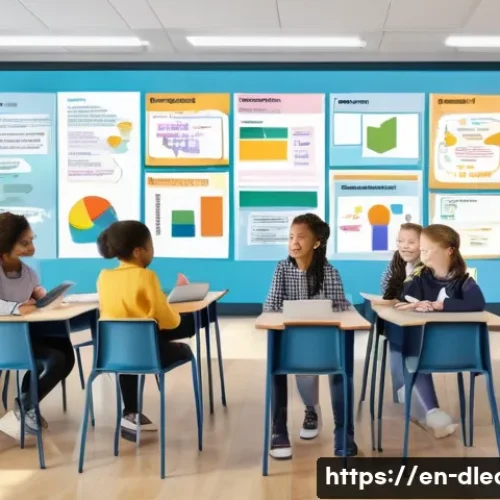
"A diverse group of fully clothed students collaborating on a virtual project using laptops in a bright, modern library. The scene emphasizes teamwork and cross-cultural understanding. Students are smiling and engaged. Safe for work, appropriate content, professional, perfect anatomy, natural proportions, high resolution."

**

The digital landscape is rapidly transforming how we learn and interact, blurring geographical boundaries. However, it also brings to light the fascinating nuances of cultural differences in online learning environments.

These differences can impact everything from communication styles to preferred learning methodologies. In my experience, understanding these cultural factors is crucial for creating effective and inclusive online experiences.

It’s a journey that requires empathy, adaptability, and a genuine curiosity to learn from one another. Let’s delve deeper into the specifics of how these digital transformations impact education and cultural understanding.

I’ll give you a clear and comprehensive look at how these trends are shaping the future. In the rapidly evolving landscape of digital learning, it’s no longer enough to simply translate content.

True localization means adapting the entire learning experience to resonate with specific cultural values and norms. I’ve seen firsthand how a lack of cultural sensitivity can lead to disengagement and even offense.

For example, a gamified learning module that relies heavily on competition might be highly motivating for students in some cultures, while alienating for others who prioritize collaboration.

Moreover, the rise of AI-powered learning platforms presents both opportunities and challenges. While AI can personalize learning paths and provide instant feedback, it’s crucial to ensure that algorithms are trained on diverse datasets to avoid perpetuating cultural biases.

I recently attended a webinar where experts discussed the ethical implications of using AI in education, highlighting the need for transparency and accountability in algorithm design.

This isn’t just about avoiding stereotypes; it’s about fostering a sense of belonging and empowering learners from all backgrounds. Looking ahead, I believe that the future of digital learning lies in creating truly immersive and culturally responsive experiences.

Imagine virtual reality simulations that allow students to explore different cultures firsthand, or AI tutors that adapt their communication style to match individual learners’ preferences.

The possibilities are endless, but it’s important to approach these technologies with a critical eye and a commitment to inclusivity. After all, the goal of education is not just to impart knowledge, but to cultivate empathy, understanding, and a global mindset.

And understanding cultural variations in digital learning will become increasingly crucial. Let’s get to the bottom of this issue!

Navigating Communication Styles Across Cultures

unlock - 이미지 1

Understanding Direct vs. Indirect Communication

One of the most striking differences I’ve noticed is in communication styles. In some cultures, direct communication is highly valued – getting straight to the point is seen as efficient and respectful. However, in other cultures, indirect communication is preferred, where messages are conveyed through context, tone, and nonverbal cues. I remember working with a team from Japan on a project. Initially, I found their responses vague and indirect. It took me a while to realize they were trying to be polite and avoid direct disagreement, which is highly valued in their culture. Now, I always try to be mindful of these nuances and adjust my communication style accordingly. I’ve learned to read between the lines, pay attention to nonverbal cues, and ask clarifying questions in a respectful manner. This has significantly improved my ability to collaborate effectively with people from diverse backgrounds.

The Role of Nonverbal Communication

Nonverbal communication, including body language, facial expressions, and tone of voice, also plays a crucial role in intercultural interactions. What might be considered polite and respectful in one culture could be interpreted as rude or dismissive in another. For instance, maintaining direct eye contact is often seen as a sign of sincerity in Western cultures, but in some Asian cultures, it can be perceived as aggressive or challenging. I once made the mistake of nodding too enthusiastically during a presentation by a colleague from China, which she later told me made her uncomfortable because it seemed like I was rushing her. Now, I make a conscious effort to research and understand the nonverbal communication norms of different cultures before engaging in online interactions. This includes paying attention to the way people use gestures, facial expressions, and body language to convey meaning. It’s also important to be aware of my own nonverbal cues and how they might be interpreted by others.

Adapting Teaching Methodologies for Global Audiences

Personalized Learning Paths vs. Collective Learning

Different cultures have different attitudes toward personalized learning. Some cultures place a strong emphasis on individual achievement and encourage students to pursue their own unique learning paths. In these cultures, personalized learning platforms that adapt to individual learning styles and paces can be highly effective. However, other cultures prioritize collective learning and emphasize the importance of collaboration and group work. In these cultures, learning experiences that foster teamwork and social interaction may be more engaging and effective. I remember facilitating an online course for students from both the United States and South Korea. The American students were highly motivated by the personalized learning paths and the ability to work at their own pace. However, the Korean students felt isolated and preferred more opportunities for group discussions and collaborative projects. To address this, I incorporated more group activities and online forums into the course, which improved engagement and satisfaction for all students.

Integrating Cultural Examples and Case Studies

One of the most effective ways to make online learning more culturally relevant is to integrate cultural examples and case studies into the curriculum. This helps students see how the concepts they are learning apply to their own cultural contexts and perspectives. I’ve found that using real-world examples from different cultures can make the learning material more engaging and relatable. For instance, when teaching about marketing principles, I include case studies of successful marketing campaigns from different countries. This not only helps students understand the concepts better but also exposes them to different cultural values and consumer behaviors. Similarly, when teaching about project management, I use examples of how project management practices vary across cultures. This helps students develop a more global mindset and prepares them to work effectively in diverse teams. By incorporating cultural examples and case studies, I can create a more inclusive and engaging learning environment for all students.

Addressing Technological Access and Digital Literacy

Bridging the Digital Divide

Access to technology and digital literacy are critical factors in ensuring equitable access to online learning. However, there is a significant digital divide between developed and developing countries, as well as between different socioeconomic groups within the same country. Many students in developing countries lack access to reliable internet connections, computers, and other essential technologies. Additionally, many students lack the digital literacy skills needed to effectively use online learning platforms and resources. To address this, it’s important to provide alternative learning options for students who lack access to technology, such as offline materials, mobile learning apps, and community-based learning centers. It’s also important to provide digital literacy training to students and teachers to help them develop the skills they need to succeed in online learning environments. I recently volunteered with a nonprofit organization that provides digital literacy training to students in underserved communities. I was amazed at how quickly these students learned to use computers and online resources. With the right support, anyone can learn to thrive in the digital world.

Designing for Low-Bandwidth Environments

When designing online learning materials, it’s important to consider the bandwidth limitations of students in different parts of the world. High-resolution videos and interactive simulations can be engaging, but they can also be inaccessible to students with slow internet connections. To address this, it’s important to optimize learning materials for low-bandwidth environments. This includes using compressed images and videos, providing text-based alternatives to multimedia content, and designing websites that load quickly and efficiently. I once worked on a project to develop an online course for students in rural Africa. We quickly realized that many of our students had very limited internet access. To address this, we designed the course to be as lightweight as possible, using simple graphics, text-based content, and offline downloadable materials. The course was a huge success, and we received positive feedback from students who were able to access and use the materials even with slow internet connections. In today’s world of online content, it’s important to prioritize accessibility and design for low-bandwidth environments.

Fostering Inclusive Online Communities

Creating Safe and Respectful Online Spaces

Creating a safe and respectful online community is essential for fostering a positive learning environment. This includes establishing clear guidelines for online behavior, moderating discussions to prevent harassment and discrimination, and providing resources for students who need support. It’s also important to encourage students to be respectful of different cultural perspectives and to avoid making assumptions or stereotypes. I’ve found that creating a code of conduct for online discussions can be helpful in setting expectations for respectful communication. The code of conduct should clearly state what types of behavior are not allowed, such as personal attacks, hate speech, and discrimination. It should also outline the consequences for violating the code of conduct, such as being banned from the discussion forum. By creating a safe and respectful online space, educators can help students feel comfortable sharing their ideas and perspectives, which leads to more engaging and productive learning experiences.

Encouraging Cross-Cultural Dialogue

One of the most valuable benefits of online learning is the opportunity to connect with people from different cultures and backgrounds. Encouraging cross-cultural dialogue can help students develop a deeper understanding of different perspectives and challenge their own assumptions. I’ve found that creating online discussion forums where students can share their experiences and perspectives on different topics can be a great way to foster cross-cultural dialogue. It’s also important to provide opportunities for students to collaborate on group projects and assignments. This allows them to work together to solve problems and learn from each other’s strengths and weaknesses. I recently facilitated an online course where students from different countries worked together on a project to develop a marketing plan for a new product. The students had to communicate and collaborate effectively across cultural differences. At the end of the project, the students reported that they had learned a great deal from each other and had developed a greater appreciation for different cultural perspectives.

The Role of Language and Translation

The Importance of Accurate Translation and Localization

In order to cater effectively to a global audience, accurate translation and localization are paramount. Simply translating text is not enough; the content must be adapted to resonate with the cultural nuances and linguistic subtleties of the target audience. I’ve seen firsthand how poor translation can lead to misunderstandings, confusion, and even offense. I once came across a poorly translated website that used slang terms that were completely inappropriate for the target audience. This not only made the website look unprofessional but also alienated potential customers. To avoid these issues, it’s important to work with professional translators and localizers who have a deep understanding of the target culture. These experts can ensure that the content is not only accurately translated but also culturally appropriate and relevant.

Leveraging Technology for Multilingual Support

Technology can play a key role in providing multilingual support for online learners. Automated translation tools can be used to translate text and subtitles in real-time, making it easier for students to understand the learning material. However, it’s important to use these tools with caution, as they can sometimes produce inaccurate or nonsensical translations. I’ve found that using a combination of automated translation tools and human review can be an effective way to provide multilingual support while ensuring accuracy. Additionally, many online learning platforms offer features that allow students to select their preferred language for the user interface and course materials. This can significantly improve the learning experience for students who are not fluent in the primary language of the course. By leveraging technology effectively, educators can create a more inclusive and accessible online learning environment for students from all over the world.

Cultural Factor Impact on Online Learning Strategies for Adaptation
Communication Style Misunderstandings, frustration Provide clear communication guidelines, use visuals, encourage questions
Learning Preferences Disengagement, poor performance Offer diverse learning materials, allow for individual and group work
Technological Access Unequal access, exclusion Provide offline resources, design for low-bandwidth, offer digital literacy training
Language Proficiency Difficulty understanding content Provide accurate translations, use visuals, offer multilingual support
Cultural Values Misinterpretations, offense Integrate cultural examples, promote respect, avoid stereotypes

The Future of Culturally Responsive Digital Learning

Embracing Diversity and Inclusion

The future of digital learning lies in creating truly culturally responsive experiences that embrace diversity and inclusion. This means designing learning materials and platforms that are accessible and engaging for students from all backgrounds. It also means creating online communities where students feel safe, respected, and valued. I believe that technology has the potential to be a powerful tool for promoting cultural understanding and empathy. By connecting students from different cultures and backgrounds, we can help them develop a more global mindset and prepare them to thrive in an increasingly interconnected world. Embracing diversity and inclusion is not just the right thing to do; it’s also the smart thing to do. Research has shown that diverse teams are more creative, innovative, and effective than homogeneous teams. By creating culturally responsive digital learning environments, we can unlock the full potential of all students and create a more equitable and just society.

Continuous Improvement and Adaptation

Creating culturally responsive digital learning experiences is an ongoing process that requires continuous improvement and adaptation. As technology evolves and cultures change, it’s important to stay up-to-date on the latest trends and best practices. This includes gathering feedback from students and stakeholders, conducting research on cultural differences, and experimenting with new approaches. I believe that the key to success is to be flexible, adaptable, and open to learning from others. By embracing a growth mindset and continuously seeking to improve our practices, we can create digital learning experiences that are truly transformative for students from all backgrounds. It’s important to remember that there is no one-size-fits-all solution when it comes to culturally responsive digital learning. What works well in one context may not work well in another. The key is to be responsive to the unique needs and preferences of each individual student and community.

Frequently Asked Questions (FAQ) 📖

Q: How can educators ensure that digital learning platforms are culturally sensitive and inclusive?

A: Well, from what I’ve observed, it’s not just about slapping a translation on existing materials. It’s about really digging deep and understanding the nuances of different cultures.
For instance, a colleague of mine once worked on a project where they used humor in a training video, thinking it would be universally appreciated. Turns out, the cultural context they were targeting viewed that type of humor as unprofessional and even disrespectful.
So, educators need to actively involve people from diverse backgrounds in the design process, solicit feedback, and be willing to adapt the content and delivery methods based on that input.
Basically, don’t assume anything!

Q: What are some practical steps that institutions can take to avoid perpetuating cultural biases through

A: I in education? A2: This is a tough one, and I think it’s something we’re all still figuring out. From my understanding, one crucial step is to demand transparency from AI developers about the datasets used to train their algorithms.
If the data is skewed towards a particular demographic or viewpoint, the AI will inevitably reflect those biases. Also, institutions should establish clear ethical guidelines for the use of AI in education, including regular audits to identify and correct any biases that may emerge.
I was reading an article recently that emphasized the importance of continuous monitoring and evaluation. It’s not a one-time fix, it’s an ongoing process.

Q: What are some innovative ways to create immersive and culturally responsive digital learning experiences that go beyond traditional online courses?

A: Oh, the possibilities here are truly exciting! I’m thinking things like virtual reality simulations where students can “walk” through historical sites or interact with people from different cultures in a realistic setting.
Or maybe AI-powered tutors that adapt their teaching style to match individual learning preferences and cultural backgrounds. I remember a conversation I had with a tech developer about using AI to create personalized learning experiences; he shared that it’s about more than just delivering information.
It’s about creating a space where students feel seen, heard, and respected, no matter where they come from. I’ve seen some truly impressive work being done in this area, and it’s only going to get better in the coming years.
It’s all about creating empathy through technology.