
Hey everyone! So, let’s be real for a sec. The way we learn has completely transformed, hasn’t it?
Gone are the days when ‘digital learning’ just meant a static PDF or a boring pre-recorded lecture. Now, it’s a dynamic, ever-evolving landscape that, frankly, can be a little overwhelming to navigate.
I’ve personally experimented with countless online courses and tools, always trying to figure out what truly sticks and what’s just noise. What I’ve discovered is that finding your unique digital learning style isn’t just a trend; it’s the secret sauce to actually enjoying and retaining information in this fast-paced world.
With so many innovative tools out there, from AI-powered tutors to immersive VR environments, understanding how *you* best absorb knowledge online is more crucial than ever.
It’s about tailoring the experience to your brain, not forcing your brain to fit the experience. You know that feeling when a concept finally clicks because the teaching method just *gets* you?
That’s what we’re aiming for. So, if you’re feeling a bit lost in the sea of online options, or just curious about how to make your digital learning journey genuinely effective and even fun, then you’re in the right place.
I’m here to unpack exactly how you can pinpoint your ideal digital learning style and supercharge your study sessions. Let’s get into the nitty-gritty and discover some truly transformative strategies!
Discovering Your Inner Digital Learner: It’s More Than Just Watching Videos
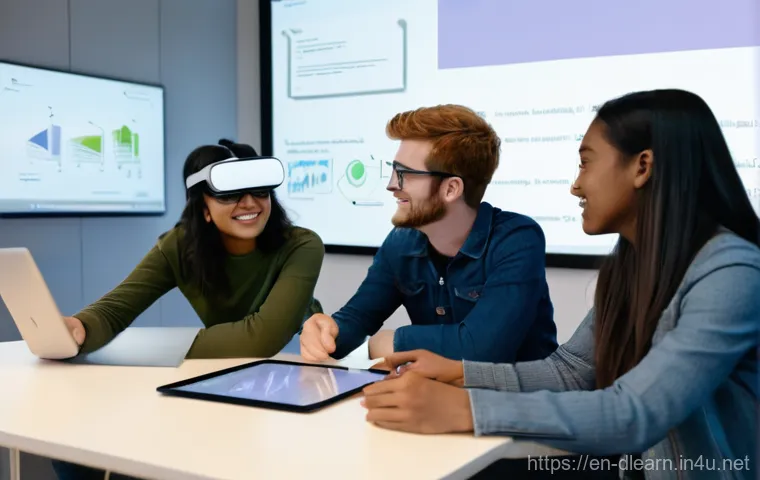
It feels like just yesterday we were all scrambling to figure out Zoom, right? Now, digital learning isn’t just a backup plan; it’s the main stage for so many of us.
But here’s the kicker: just because you’re online doesn’t mean one method works for everyone. I’ve been down this rabbit hole countless times, signing up for courses, downloading apps, and trying every shiny new educational tool out there.
What I’ve really learned, often the hard way, is that forcing yourself into a learning style that doesn’t resonate with you is a recipe for frustration and burnout.
Think about it – we wouldn’t all wear the same shoes, so why would we expect our brains to thrive on the exact same digital diet? It’s about being an active participant in your own learning journey, not just a passive consumer.
This means getting a bit introspective about how you genuinely absorb new information. Do you thrive on interactive elements, or do you prefer to quietly digest written material?
Are you someone who needs to see it, hear it, or do it? When you pinpoint this, it’s like suddenly getting a superpower – everything just clicks into place, and learning actually becomes enjoyable, not a chore.
It transforms those long study sessions into genuinely productive and even exciting intellectual adventures.
Beyond the Passive Scroll: Engaging Your Brain Actively
So many of us fall into the trap of mindlessly scrolling through lectures or articles, thinking we’re learning. But active engagement is where the magic happens.
I remember trying to learn a new programming language by just watching tutorials. It was like trying to learn to swim by watching a dolphin – I understood the theory, but I couldn’t do it myself!
It was only when I started pausing, practicing the code, and even trying to teach it back to an imaginary friend that it truly sank in. Your brain needs to grapple with the information, question it, and apply it.
This could mean taking notes by hand, even if the content is digital, or creating flashcards, or even pausing a video to explain a concept out loud to yourself.
It’s about moving beyond simply recognizing information to truly understanding and synthesizing it.
The Power of Self-Reflection in Digital Spaces
Before you even dive into new material, take a moment. What worked for you in traditional schooling? What didn’t?
For instance, I always struggled in lecture-heavy classes but excelled in labs where I could get hands-on. Online, this translates to me seeking out interactive simulations or project-based courses rather than purely video-based ones.
Understanding these preferences is your first step to digital learning mastery. It’s not about being “good” or “bad” at learning; it’s about understanding your unique cognitive blueprint and then intentionally choosing digital environments that naturally align with it.
Optimizing Your Environment: Creating Your Learning Sanctuary
When I first started seriously diving into online courses, my “study space” was often my couch, with the TV murmuring in the background and my phone constantly pinging.
Unsurprisingly, my retention was abysmal, and my frustration levels were through the roof. It felt like I was constantly fighting for my attention, and the information just wasn’t sticking.
Over time, I realized that creating a dedicated learning environment, even if it’s just a corner of a room, makes an enormous difference. It signals to your brain that “this is where we focus,” almost like a psychological trigger.
It doesn’t have to be fancy, but it does need to be conducive to concentration. Think about lighting, background noise, and even the comfort of your chair.
These seem like small details, but collectively, they profoundly impact your ability to absorb and process complex ideas.
Minimizing Digital Distractions: Taming the Notification Beast
This is a tough one, especially for someone like me who practically lives online. My phone is my nemesis and my best friend all at once. For serious learning, though, it has to become a mute, distant acquaintance.
Turning off notifications, closing unnecessary browser tabs, and even putting your phone in another room can be revolutionary. I’ve found that using website blockers for a set period or even just putting my phone on “Do Not Disturb” and flipping it face down can make a world of difference.
It’s incredible how much mental energy we expend just resisting the urge to check that latest Instagram story or reply to a text. Reclaiming that mental bandwidth for learning is one of the most powerful things you can do for your digital study sessions.
The Ergonomics of Digital Learning: Taking Care of Your Body
Hours spent hunched over a screen can wreak havoc on your body, leading to eye strain, neck pain, and a general sense of fatigue that makes learning even harder.
I once powered through an entire coding bootcamp practically glued to my laptop, and by the end, my back felt like a knotted mess. Now, I’m a stickler for good posture, regular breaks, and even investing in a decent monitor and keyboard.
Standing desks are a game-changer for many, and even simple things like adjusting your screen brightness or using blue light filters can make a big difference.
Remember, your body supports your brain, and if your body is uncomfortable, your brain will struggle to perform at its best.
Embracing Technology: Tools That Truly Enhance, Not Just Distract
It’s easy to get lost in the sheer volume of educational apps and platforms out there. Every week, it seems there’s a new AI tutor or a VR learning environment popping up.
I’ve certainly had my share of downloading an app, using it once, and then forgetting all about it. The key, I’ve found, is to be discerning and to choose tools that genuinely align with your *personal* learning style, rather than just jumping on every bandwagon.
For me, visual tools and interactive simulations are gold, while others might thrive with audio-based apps or collaborative whiteboards. It’s about leveraging technology strategically to fill gaps or enhance areas where you naturally excel, not just accumulating a collection of unused apps.
AI as Your Personalized Learning Buddy
AI-powered tools have honestly blown my mind in the past few years. They can adapt to your pace, identify your weak spots, and even generate practice questions tailored to your needs.
I’ve used AI writing assistants to refine my essays and AI language learning apps that truly personalize the vocabulary and grammar exercises. It’s like having a dedicated tutor who’s available 24/7 and never judges you for asking the same question ten times.
If you’re struggling with a particular concept, an AI can often explain it in multiple ways until it finally clicks for you. This personalization is a massive leap forward from the generic content we often encountered in earlier digital learning models.
Beyond the Screen: VR and AR for Immersive Experiences
While not yet mainstream for all learning, virtual and augmented reality are starting to revolutionize how we interact with complex subjects. Imagine dissecting a virtual frog without the mess, or walking through ancient Rome from your living room.
I recently tried a VR app that simulated a chemistry lab, and the ability to manipulate molecules in a 3D space was incredibly intuitive in a way a textbook could never be.
These immersive technologies offer a visceral, almost tactile way to engage with information, which can be particularly powerful for kinesthetic and visual learners.
It adds a whole new dimension to understanding concepts that might otherwise feel abstract and distant.
The Social Learner Online: Connecting and Collaborating Effectively
For a long time, I viewed online learning as a solitary endeavor. It was just me and my screen, battling through modules. But then I started joining online communities, study groups, and forums related to my courses, and it completely changed the game.
Suddenly, I wasn’t alone. I had people to bounce ideas off of, ask questions, and even just commiserate with when things got tough. This social interaction not only boosted my morale but also deepened my understanding of the material.
Explaining a concept to someone else, or hearing their perspective on a tricky problem, often illuminates areas you hadn’t considered. It replicates some of the best aspects of a traditional classroom, but with the added flexibility of online interaction.
Finding Your Tribe: Online Communities and Study Groups
Whether it’s a dedicated Slack channel, a Reddit community, or a Facebook group for your specific course, finding your tribe online is invaluable. I’ve made genuine connections and even friendships through these groups.
We share resources, clarify doubts, and sometimes just vent about a particularly challenging assignment. It creates a sense of accountability and camaraderie that can be hard to maintain when you’re learning solo.
Don’t underestimate the power of peer support; sometimes, the best explanation comes from a fellow student who just grasped the concept themselves.
The Benefits of Peer Teaching and Collaborative Projects
Teaching someone else a concept is arguably the most effective way to solidify your own understanding. When you have to articulate something clearly and answer questions, it forces you to truly grasp the nuances.
Many online platforms now offer collaborative projects, which are fantastic for this. You learn not just the subject matter, but also crucial teamwork and communication skills – all while working with people from different backgrounds and locations.
It’s an incredibly rich learning experience that goes far beyond just content absorption.
Embracing Flexibility: Crafting a Schedule That Works for Your Brain

One of the biggest draws of digital learning is its flexibility, right? You can learn when and where you want. But that flexibility can also be a double-edged sword if you don’t manage it effectively.
I’ve definitely fallen into the trap of thinking “I’ll do it later” and then scrambling at the last minute. What I’ve found is that instead of rigid schedules, it’s about understanding your own natural energy rhythms and tailoring your study times to those.
Are you a morning person who thrives on tackling complex topics before noon? Or do you get your second wind in the evenings? Honoring these natural patterns makes a huge difference in productivity and enjoyment.
It’s about working with your brain, not against it.
Understanding Your Chronotype for Peak Performance
Are you a lark, an owl, or somewhere in between? I discovered I’m definitely more of a “night owl,” and trying to force myself to do heavy-duty learning at 8 AM was always a struggle.
Now, I reserve my early mornings for lighter tasks and tackle my most demanding intellectual work in the late afternoon or evening when my brain feels most alive.
This personalized approach to scheduling has not only made me more efficient but also less stressed. It feels less like a chore and more like a natural part of my day.
The Pomodoro Technique and Micro-Learning Bursts
Sometimes, the sheer volume of information can feel overwhelming. That’s where techniques like the Pomodoro Technique (25 minutes of focused work, 5-minute break) come in handy.
It breaks down large tasks into manageable chunks and helps maintain focus. I also swear by “micro-learning” – grabbing 10-15 minutes here and there to review flashcards, watch a short tutorial, or read a quick article.
Those small bursts add up significantly over time, especially when you’re dealing with a busy schedule.
Staying Motivated and Overcoming Digital Learning Fatigue
Let’s be honest, digital learning isn’t always sunshine and rainbows. There are days when motivation dips, and the screen just feels draining. I’ve been there, staring blankly at a module, feeling completely overwhelmed and ready to throw in the towel.
It’s crucial to have strategies in place to combat this “digital learning fatigue” and keep your spirits up. This isn’t just about discipline; it’s about self-care and understanding that learning is a marathon, not a sprint.
Acknowledge your progress, celebrate small wins, and don’t be afraid to step away when you need to recharge.
Building a Reward System for Your Milestones
Positive reinforcement works wonders, even for adults! I’ve started setting up little rewards for myself after completing a particularly challenging module or hitting a study goal.
It could be something small, like enjoying a special coffee, watching an episode of my favorite show, or taking a walk in the park. These aren’t about bribing myself; they’re about recognizing the effort and giving my brain a little dopamine hit that encourages it to keep going.
It helps break up the monotony and makes the whole process feel more rewarding.
The Importance of Digital Detoxes and Physical Activity
Spending hours in front of a screen can be incredibly taxing, both mentally and physically. I learned the hard way that neglecting my physical health made my digital learning journey much harder.
Regular breaks, getting outside for some fresh air, and engaging in physical activity are non-negotiable. A brisk walk, a quick gym session, or even just some stretching can do wonders for clearing your head and re-energizing you for your next study session.
It’s about finding that balance; your brain needs a break from the pixels to truly consolidate what it’s learned.
| Learning Style Preference | Best Digital Tools/Strategies | Why It Works |
|---|---|---|
| Visual Learners (seeing information) | Infographics, video tutorials, mind mapping software, digital whiteboards, interactive simulations. | These tools provide rich visual cues and spatial relationships, making complex information easier to digest and recall. Seeing connections visually helps solidify understanding. |
| Auditory Learners (hearing information) | Podcasts, audiobooks, lectures, dictation software for note-taking, discussing concepts aloud, audio explanations. | Information processed through sound resonates more deeply. Listening to explanations and verbally processing ideas helps with retention and comprehension. |
| Reading/Writing Learners (engaging with text) | E-books, academic articles, detailed blog posts, extensive note-taking apps, journaling, summarizing content in writing. | These learners thrive on written words, both consuming and producing them. The act of reading and writing helps organize thoughts and reinforce learning. |
| Kinesthetic Learners (learning by doing) | Interactive labs, simulations, project-based courses, virtual reality (VR) experiences, hands-on coding environments, role-playing games. | Physical engagement and practical application are key. These methods allow learners to experiment, build, and solve problems directly, making learning tangible. |
| Social/Collaborative Learners (learning with others) | Online study groups, discussion forums, collaborative document editing, peer-to-peer tutoring, group projects, live Q&A sessions. | Interaction with peers fosters deeper understanding through varied perspectives, discussions, and shared problem-solving. It builds community and accountability. |
Cultivating a Growth Mindset: The Secret Sauce for Online Success
Let’s be real, learning anything new, especially online, can be frustrating. You’ll hit walls, you’ll feel confused, and sometimes you’ll even doubt your own abilities.
I’ve certainly had my fair share of “I can’t do this” moments, especially when tackling a particularly thorny technical skill. But what truly makes the difference between giving up and pushing through is having a growth mindset.
This isn’t just some fluffy buzzword; it’s a fundamental belief that your abilities can be developed through dedication and hard work. It means viewing challenges not as insurmountable obstacles, but as opportunities to learn and grow.
When you adopt this perspective, every mistake becomes a valuable lesson, and every struggle becomes a stepping stone toward mastery.
Embracing Mistakes as Learning Opportunities
Oh, the mistakes! I used to dread them, feeling like they were a sign of failure. Now, after years of trial and error in digital spaces, I honestly see them as my best teachers.
Every time I’ve messed up a line of code, misunderstood a concept, or gotten an answer wrong, it’s pushed me to dig deeper and truly understand *why* it was wrong.
It’s during these moments of grappling with errors that real, deep learning happens. So, don’t shy away from making mistakes; instead, lean into them, analyze them, and use them as fuel for your next learning sprint.
It’s a crucial part of developing true mastery.
Celebrating Small Wins and Tracking Progress
It’s easy to get fixated on the finish line, but the journey of digital learning is long, and you need to acknowledge the progress you make along the way.
I keep a simple digital journal where I jot down new concepts I’ve grasped, skills I’ve acquired, or even just modules I’ve completed. Looking back at this record is incredibly motivating on those days when I feel stuck.
It reminds me of how far I’ve come and reinforces the belief that I *am* capable of learning. Celebrate every little victory, no matter how small, because each one builds momentum and keeps you moving forward.
Wrapping Up Our Digital Learning Journey
Phew, what a ride, right? Diving deep into the world of digital learning can feel like stepping into a vast, ever-expanding universe, and honestly, it’s thrilling. Over the years, I’ve seen firsthand how transformative it can be, but also how easy it is to get lost in the noise if you don’t chart your own course. What I truly hope you take away from this isn’t just a list of tools or techniques, but a profound understanding of yourself as a learner. It’s about cultivating that inner curiosity, empowering yourself to experiment, and being kind to yourself through the inevitable ups and downs. Remember, your digital learning adventure is uniquely yours, and the most effective path is the one you forge with intention and self-awareness. So, go forth, explore, and let your intellectual curiosity lead the way – the digital world is truly your oyster! It’s all about making that connection between what you want to learn and how your amazing brain best absorbs it.
Handy Information to Keep in Mind
As we wrap up our chat about navigating the ever-evolving landscape of digital learning, I really want to leave you with some genuinely actionable advice – the kind of stuff that, when I look back, I wish I’d known from day one. These aren’t just theoretical musings; they’re born from countless hours of personal trial, error, and those delightful “aha!” moments that make the whole journey worthwhile. Applying even a few of these tips has dramatically shifted my own productivity and, more importantly, my enjoyment of learning online. So, don’t just skim these; really think about how you can integrate them into your routine. They’re designed to be the quick boosts that keep your motivation high and your learning trajectory always climbing, ensuring you get the most out of every digital minute you spend.
1. Know Yourself: Spend a little time figuring out how you learn best. Are you visual, auditory, kinesthetic? Tailor your resources to match your innate strengths.
2. Engage Actively: Don’t just consume content passively. Pause, reflect, explain concepts aloud, and consistently practice. Your brain thrives on interaction, not just passive viewing.
3. Optimize Your Space: Create a dedicated, distraction-free learning zone. Your physical and digital environment plays a monumental role in your ability to focus and effectively retain information.
4. Leverage Tech Smartly: Use AI and other digital tools to specifically enhance your personal learning style, rather than just jumping on every new trend. Prioritize quality and relevance over quantity.
5. Connect with Others: Learning doesn’t have to be a lonely endeavor. Actively seek out and join online communities, study groups, or find a learning buddy for invaluable support and fresh perspectives.
Your Digital Learning Blueprint: Key Takeaways
Ultimately, what truly sets apart successful digital learners isn’t just access to a plethora of resources, but the conscious, deliberate effort they put into understanding themselves as learners and actively shaping their learning environment and overall approach. It’s fundamentally about being proactive, curious, and experimental, rather than a passive recipient of information. Remember that your learning journey is profoundly personal; there’s no single “right” way to learn online, only the way that consistently works best for your unique cognitive wiring and individual lifestyle. Embrace the inherent flexibility that digital learning offers, celebrate every single victory, no matter how seemingly small, and most importantly, be incredibly patient and persistently kind to yourself. The digital world presents an unparalleled opportunity for continuous personal and professional growth, and by wholeheartedly adopting a growth mindset and strategically utilizing the incredible array of tools at your disposal, you’re not just learning – you’re truly mastering the art of lifelong intellectual expansion. Keep experimenting, keep connecting, and above all, keep that beautiful spark of curiosity vibrantly alive!
Frequently Asked Questions (FAQ) 📖
Q: How can I actually figure out my unique digital learning style?
A: This is such a fundamental question, and honestly, it’s where everything truly begins! I’ve spent so much time trying to cram my brain into learning methods that just didn’t click, only to realize later that I was fighting my natural inclinations.
The first step, as I see it, is a little self-reflection. Think back to a time you learned something new online and it really stuck. What made that experience so good?
Did you love watching engaging video tutorials, poring over well-written articles, or getting hands-on with interactive simulations? Generally, when we talk about learning styles, we often refer to categories like Visual, Auditory, Read/Write, and Kinesthetic (VARK).
Visual learners often thrive with diagrams, infographics, videos, and color-coded notes. They literally “see” the information in their minds. Auditory learners really connect when they hear information – think podcasts, lectures, discussions, or even reading things aloud to themselves.
Read/Write learners are all about the written word. They love textbooks, taking detailed notes, and summarizing concepts in their own words. Kinesthetic learners are the “doers.” They learn best through hands-on experiences, experiments, role-playing, or anything that involves physical engagement.
To truly pinpoint yours, I’d suggest a little experiment. The next time you need to grasp a new concept, try approaching it in a few different ways. Watch a video, listen to a podcast on the topic, read an in-depth article, and then try to explain it or apply it practically.
Which method felt most natural and effective for you? There are also some great online quizzes out there that can give you a starting point, but trust me, your own experience is the best guide here.
Once you know your dominant style (or even a combination!), you can stop forcing yourself into square holes and start tailoring your digital learning journey to you.
Q: With so many tools, which ones are actually worth trying for different learning styles?
A: Oh, this is where the digital learning landscape gets really exciting – and a bit overwhelming, right? I’ve been there, staring at a sea of apps and platforms, wondering which ones are actually going to deliver.
My biggest takeaway? The “best” tool isn’t universal; it’s the one that aligns with your learning style and keeps you engaged. For my Visual learners out there, platforms like Coursera and Udemy often excel with their rich video content and visual presentations.
Tools that let you create mind maps, infographics, or even digital flashcards (like those found in StudyFetch) are fantastic. I’ve personally found that seeing concepts laid out clearly in charts and diagrams makes a huge difference for me when I’m trying to internalize complex ideas.
If you’re an Auditory learner, definitely dive into platforms with strong podcast libraries or discussion forums, where verbal interaction is key. Many online courses on platforms like LinkedIn Learning and edX offer engaging lectures, and simply listening to experts explain things can be incredibly powerful.
Virtual study groups or even recording yourself explaining a concept can work wonders. For Read/Write learners, the classics still work, but with a digital twist.
Think platforms that allow extensive note-taking, rich text-based resources, and opportunities for written assignments and peer feedback. Many AI-powered platforms are emerging that can help you summarize articles or even generate practice questions based on your readings, which is a game-changer for really solidifying that knowledge.
And for my Kinesthetic learners, this is where the newer, innovative tech really shines! Immersive VR environments, simulations, and hands-on project-based learning platforms are becoming incredibly effective.
Imagine “doing” a science experiment in VR or role-playing a business negotiation in a simulated environment. I’ve seen firsthand how these interactive experiences can make abstract concepts tangible and truly unforgettable.
Look for platforms that emphasize practical application and interactive exercises. Some AI-powered LMS (Learning Management Systems) are also incorporating adaptive learning paths that can provide tailored, interactive content based on your progress.
The key is to experiment. Most platforms offer free trials or introductory content, so you can test the waters and see what truly resonates with your unique brain.
Q: How do I avoid getting overwhelmed and actually stick with digital learning long-term?
A: Ah, the million-dollar question! It’s so easy to get excited about a new course or tool, only to find yourself feeling bogged down and losing momentum a few weeks later.
I’ve definitely been there, staring at a mountain of modules and wondering how I’ll ever reach the summit. The truth is, staying motivated in the digital space requires a different kind of discipline and some smart strategies.
Firstly, and I cannot stress this enough: take regular breaks! Seriously, our brains aren’t designed for endless screen time. Studies even suggest our focus dwindles after about 90 minutes.
I always schedule short 10-15 minute breaks every hour or so. Step away, grab a drink, stretch, look out the window – anything to give your eyes and mind a reset.
This isn’t slacking; it’s optimizing. Secondly, structure is your best friend. Even though digital learning offers flexibility, a routine helps immensely.
Designate specific times and a dedicated space for your learning. Treat these sessions like important appointments. I also find breaking down large courses into smaller, manageable chunks makes a huge difference.
Instead of “finish Module 3,” it becomes “complete Section 1 of Module 3” – tiny wins keep the motivation flowing. Third, engage actively, not passively.
It’s easy to just click through content, but true learning happens when you interact. Participate in discussion forums, ask questions, or even try to teach what you’ve learned to someone else.
Some platforms incorporate gamification elements, like points or badges, which can be surprisingly effective at keeping you engaged and giving you a sense of progress.
The more you interact with the material and other learners, the stronger those connections become, both in your brain and in your community. Finally, prioritize self-care and recognize burnout.
Digital learning can be demanding. Pay attention to signs of fatigue, like trouble sleeping, irritability, or a general lack of interest. When I feel that creeping in, I make sure to prioritize exercise, healthy eating, and enough sleep.
Don’t be afraid to adjust your schedule or even reach out for help if you’re truly overwhelmed. Your mental and physical well-being are paramount to long-term success.
It’s a marathon, not a sprint, and pacing yourself is key!