Hey there, fellow knowledge-seekers! Can we talk about how utterly transformative education has become? It wasn’t that long ago that “digital learning” conjured images of dry, endless video calls and static PDFs.
But oh, how the tides have turned! I’ve personally been blown away by the incredible innovations emerging in the world of online education, moving far beyond mere content delivery to truly engaging, interactive experiences.
We’re talking about creative approaches that harness the power of AI, gamification, and personalized learning paths, making education not just accessible, but genuinely exciting.
From what I’ve seen, it’s about time we stopped seeing digital education as a compromise and started embracing it as a playground for imaginative teaching.
It’s revolutionizing how we learn, retain information, and even how we connect, making every moment an opportunity for growth. Think about personalized content that adapts to *your* pace, virtual field trips that transport you anywhere, and collaborative projects that feel like real-world missions.
This isn’t just about new tech; it’s about a whole new mindset for educators and learners alike, transforming passive consumption into active participation.
If you’re ready to unlock the secrets to making digital learning dynamic and inspiring, then stick around, because we’re about to dive deep into some truly game-changing strategies!
Beyond the Screen: Crafting Immersive Learning Experiences
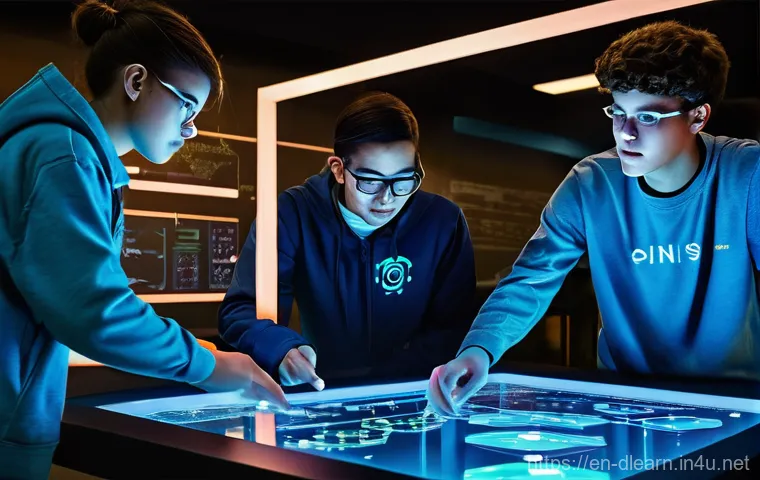
It’s honestly mind-boggling how far we’ve come from simply staring at a screen. Remember those early days of online learning where it felt like you were just watching a glorified PowerPoint presentation?
Yeah, me too. But thankfully, those days are quickly becoming a distant memory. What I’ve seen lately is a huge shift towards creating learning environments that truly pull you in, making you feel like an active participant rather than a passive observer.
It’s about designing experiences that engage all your senses and make the learning process so natural, you almost forget you’re “studying.” This isn’t just about fancy graphics; it’s about leveraging technology to simulate real-world scenarios and provide hands-on (or at least, *virtually* hands-on) experience that was once impossible outside a physical classroom.
I’ve personally experienced how much more information sticks when I’m immersed in a topic rather than just reading about it. The difference is night and day, and it’s something I genuinely believe every learner deserves.
Virtual Field Trips: Exploring Worlds from Your Living Room
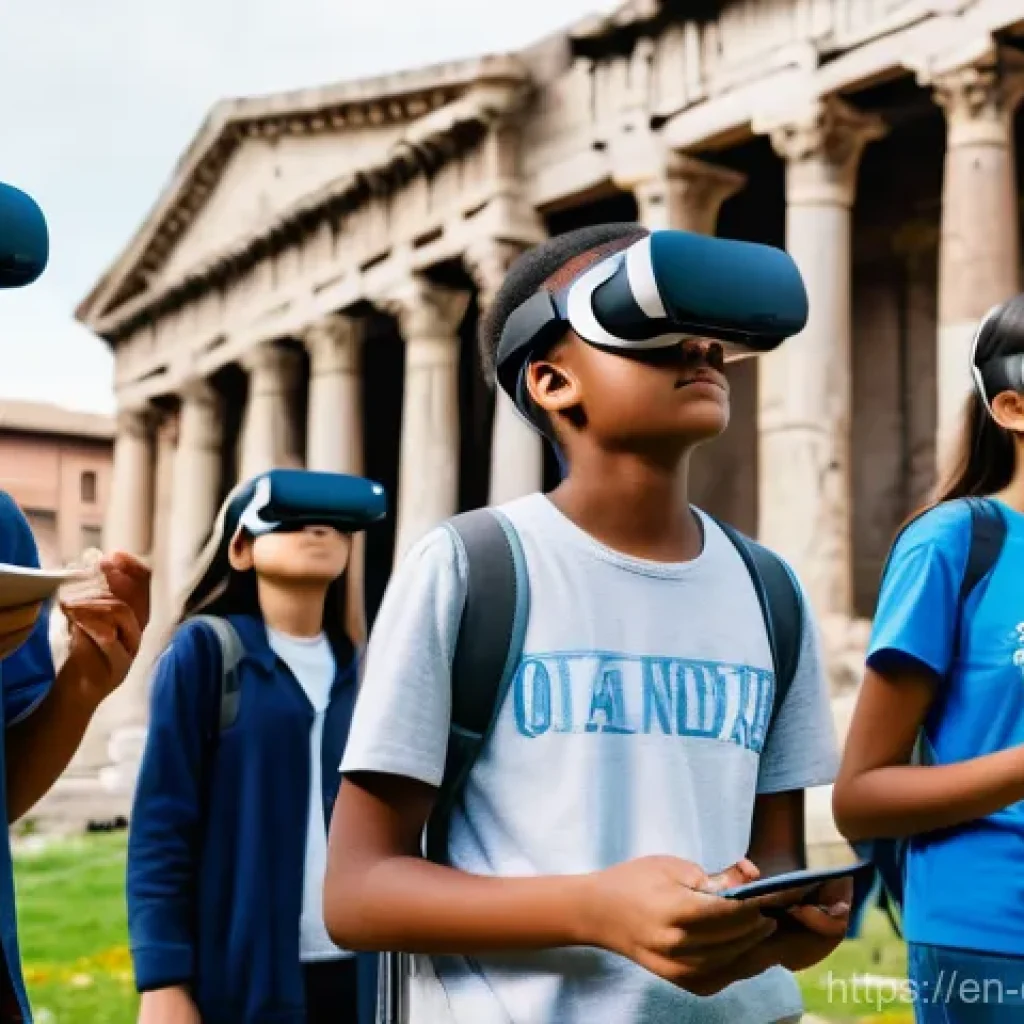
Seriously, who would’ve thought we could explore the Great Barrier Reef or wander through ancient Rome without ever leaving our couch? Virtual field trips are not just for kids anymore; they’re incredibly powerful tools for learners of all ages.
I remember a few years ago, I took a “virtual tour” of a historical site for a personal interest project, and it wasn’t just a video – it was an interactive 360-degree experience with embedded information points and even a guided audio tour.
It felt so real, almost like being there, and the depth of understanding I gained was far superior to simply reading a textbook. These trips allow us to transcend geographical boundaries, bringing the world directly to our fingertips.
It’s about making history, science, and culture accessible in a way that resonates much deeper than any static image ever could. Imagine visiting an art gallery from anywhere in the world, zooming in on brushstrokes, and listening to the curator’s commentary.
It’s an incredible level of access and engagement.
Augmented Reality: Bringing Concepts to Life
Okay, so if virtual reality takes you to another place, augmented reality brings another place *to you*. And let me tell you, it’s absolutely magical for learning.
I’ve seen some incredible apps where you can point your phone at a textbook page and watch a 3D model of a human heart pop out, pulsating right there on your desk.
Or an app that overlays constellations onto the night sky, identifying stars and planets in real-time. This isn’t just a cool parlor trick; it’s a revolutionary way to visualize complex concepts.
For fields like anatomy, engineering, or even chemistry, being able to manipulate and interact with 3D models in your own environment can drastically improve comprehension and retention.
It makes abstract ideas tangible and concrete, reducing the learning curve significantly. From what I’ve seen, this technology transforms passive viewing into active exploration, making learning much more intuitive and engaging.
| Feature | Traditional Digital Learning (e.g., PDFs, basic videos) | Modern Immersive Digital Learning (e.g., VR, AR) |
|---|---|---|
| Engagement Level | Passive, often low interaction | Active, highly interactive and experiential |
| Sensory Input | Primarily visual, some auditory | Visual, auditory, kinesthetic (through interaction) |
| Context & Immersion | Abstract, relies on imagination | Contextualized, simulated real-world environments |
| Retention | Can be challenging for complex topics | Enhanced through experiential and memorable interactions |
| Accessibility | Widely accessible, low tech barrier | Increasingly accessible, requires specific hardware/software |
Gamification: Turning Lessons into Adventures
I don’t know about you, but if something feels like a game, I’m usually way more motivated to do it. And honestly, isn’t that just human nature? This is exactly why gamification in digital education is such a game-changer – pun intended!
It takes the elements that make games so captivating – challenges, rewards, competition, and a sense of progression – and weaves them into the learning process.
It’s not about making education trivial; it’s about leveraging our innate drive for accomplishment and discovery to make learning inherently more enjoyable and sticky.
My own experience with gamified language learning apps has been a testament to this. Instead of feeling like a chore, each lesson feels like a mini-quest, and hitting those milestones genuinely feels rewarding.
It transforms the mundane into the exciting, which is incredibly powerful for sustained engagement.
Points, Badges, and Leaderboards: Motivation Reinvented
These might seem like simple concepts, but believe me, they work wonders. Earning points for completing modules, collecting badges for mastering skills, and even seeing your progress on a leaderboard can be incredibly motivating.
It creates a clear path of advancement and provides tangible recognition for effort. I’ve noticed that when I’m working towards a specific badge or trying to improve my score, I push myself harder and dedicate more time to the material.
It taps into a healthy sense of competition and personal achievement. This structure isn’t just about vanity; it provides immediate feedback and a clear sense of progression, which is crucial for keeping learners engaged, especially in self-paced digital environments where it’s easy to lose momentum.
It’s like a constant pat on the back, reminding you that your efforts are paying off.
Escape Rooms and Simulations: Learning Through Play
Okay, this is where gamification really gets exciting. Imagine a history lesson where you have to solve puzzles in a virtual “escape room” set in ancient Egypt to uncover artifacts and learn about the pharaohs.
Or a science class where you run simulations to prevent a virtual ecological disaster. These types of immersive, problem-solving activities are so much more impactful than rote memorization.
They force you to apply knowledge in dynamic situations, fostering critical thinking and decision-making skills in a low-stakes environment. I recently tried an online simulation for project management, and while it was challenging, the immediate feedback and the consequences of my virtual decisions made the learning incredibly vivid and memorable.
It felt less like a lesson and more like a real-world challenge, and I retained so much more because I was actively *doing* rather than just *reading*.
Personalized Paths: Education Tailored Just for You
One size fits all? That’s definitely a thing of the past, especially when it comes to effective learning. We all have different learning styles, paces, and prior knowledge, and frankly, traditional education struggled to accommodate that diversity.
But with digital tools, personalization isn’t just a nice-to-have; it’s becoming the norm. I’ve found that when the content adapts to *my* needs, I learn much more efficiently and stay motivated because I’m not wasting time on things I already know or getting frustrated by topics that move too fast.
It’s about creating an educational journey that feels uniquely yours, optimizing every step for maximum impact. This kind of bespoke learning experience is a huge leap forward, making education genuinely more inclusive and effective for a wider range of learners.
Adaptive Learning Algorithms: Your Pace, Your Way
This is the true magic behind personalized learning. Adaptive algorithms are like having a super-smart, infinitely patient tutor who knows exactly what you know, what you don’t know, and how you learn best.
They analyze your performance, identify your strengths and weaknesses, and then adjust the content, difficulty, and even the type of exercises presented to you in real-time.
I’ve used platforms that, if I struggled with a concept, would immediately provide alternative explanations or different practice problems. If I aced something, it would move me forward without unnecessary repetition.
This responsiveness is invaluable. It ensures you’re always challenged but never overwhelmed, keeping you in that “sweet spot” for optimal learning. It’s a huge shift from the old model where everyone got the same content at the same pace, regardless of their individual needs.
Mentorship and Coaching: Human Connection in a Digital Age
While algorithms are amazing, we can’t forget the power of human connection. Personalized learning isn’t just about tech; it’s also about tailored human support.
Digital platforms are making it easier than ever to connect learners with mentors and coaches who can provide individualized guidance, feedback, and encouragement.
I’ve personally benefited from online coaching where I could get personalized advice on my writing from an expert, something that would have been far less accessible in a traditional setting.
These mentors can offer insights that an algorithm simply can’t, providing emotional support, career guidance, and a human perspective that enriches the learning journey.
It’s the best of both worlds: the efficiency of technology combined with the empathy and wisdom of human interaction, making digital learning truly holistic.
AI as Your Learning Sidekick: Smart Tools for Smarter Learning
Let’s be real, AI used to sound like something out of a sci-fi movie, but now it’s woven into the fabric of our daily lives, and education is no exception.
And honestly, it’s not just a fancy buzzword in the learning space; it’s a powerful companion that can genuinely enhance how we acquire knowledge. I used to think AI in learning just meant automated grading, but I’ve since discovered that its capabilities stretch far beyond that, acting as a personal assistant that understands your learning patterns and helps streamline your educational journey.
It’s about leveraging smart technology to offload the repetitive tasks and provide intelligent insights, freeing up both learners and educators to focus on deeper, more meaningful engagement with the material.
Intelligent Tutoring Systems: A Private Tutor for Every Student
This is, hands down, one of the most exciting applications of AI in education. Imagine having a tutor available 24/7 who knows your exact learning profile, patiently answers your questions, and adapts their teaching style to suit you.
That’s what intelligent tutoring systems are aiming for. I’ve experimented with platforms that use AI to not just identify where I’m going wrong, but *why* I’m making those mistakes, and then provide targeted explanations and exercises.
It’s a level of individualized feedback that would be impossible for even the most dedicated human tutor to provide consistently to dozens of students.
This means complex subjects that used to require one-on-one attention can now be tackled with sophisticated AI guidance, democratizing access to high-quality, personalized instruction.
Content Curation and Recommendation: Finding Your Learning Flow
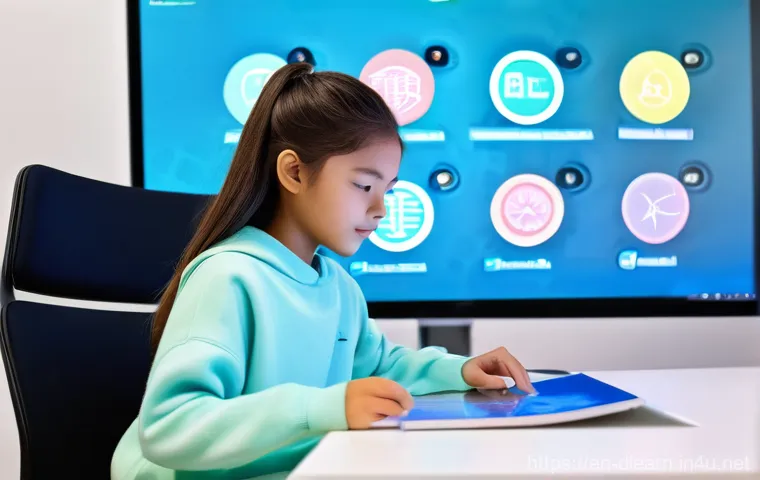
The internet is an ocean of information, and sometimes, navigating it for learning can feel overwhelming. This is where AI truly shines as a learning sidekick.
AI-powered platforms can sift through vast amounts of content – articles, videos, podcasts, courses – and recommend resources that are most relevant to your specific learning goals, interests, and current understanding.
I’ve personally used systems that, based on my previous interactions, suggested new topics or deeper dives into areas I showed particular interest in.
It’s like having a brilliant librarian who knows exactly what you need before you even ask. This saves an enormous amount of time and helps you discover high-quality, pertinent information efficiently, ensuring you stay in your learning flow without getting bogged down by irrelevant distractions.
Building Bridges: Collaborative Digital Classrooms
For a long time, the concern with digital learning was that it would isolate students, creating a solitary experience. But what I’ve seen, and what truly excites me, is how digital tools are actually fostering *more* connection and collaboration than ever before.
It’s about breaking down the traditional four walls of the classroom and creating a global learning community where ideas can be shared freely, and diverse perspectives can enrich the educational process.
I firmly believe that learning is a fundamentally social activity, and digital platforms are providing incredible new avenues for peer-to-peer interaction, group projects, and discussions that mirror, and often surpass, face-to-face interaction in their breadth and depth.
Project-Based Learning: Real-World Challenges, Virtual Teams
Project-based learning has always been a powerful way to learn by doing, but digital tools have absolutely supercharged it. Now, students from different cities, or even different continents, can collaborate on complex projects, bringing their unique skills and perspectives to the table.
I’ve participated in online projects where our team used shared digital workspaces, video conferencing, and collaborative document editing to build a business plan.
It was challenging, but the experience of coordinating with people in different time zones, managing tasks virtually, and overcoming communication hurdles was invaluable.
These experiences don’t just teach academic content; they build essential 21st-century skills like digital literacy, cross-cultural communication, and remote teamwork, preparing learners for a truly globalized workforce.
Global Connections: Learning Beyond Borders
One of the most profound benefits of the digital classroom is its ability to connect learners across geographical and cultural divides. Imagine discussing global politics with students from Europe, Asia, and Africa in real-time, or collaborating on a creative writing piece with peers whose first language is different from yours.
These interactions aren’t just educational; they’re transformative. I’ve been part of online forums where I gained insights into cultural nuances and global issues that I would never have encountered in my local community.
It broadens horizons, fosters empathy, and creates a truly global perspective that is absolutely essential in our interconnected world. It’s about building a generation of global citizens who understand and appreciate diversity, all through the power of digital communication.
The Power of Storytelling: Engaging Hearts and Minds Online
Let’s face it, humans are hardwired for stories. From ancient myths to modern blockbusters, narratives capture our attention, stir our emotions, and make information memorable.
So, why should education be any different? What I’ve seen making a huge splash in digital learning recently is the intentional integration of storytelling to make content not just informative, but truly captivating.
It’s about transforming dry facts into compelling narratives that learners can connect with on a deeper level. When you wrap learning content in a good story, it stops feeling like “work” and starts feeling like an adventure, and that, my friends, is a powerful shift for engagement and retention.
I’ve personally found that the lessons I remember most vividly are always the ones that were presented through a compelling narrative.
Narrative-Driven Courses: Where Education Meets Entertainment
This isn’t about dumbing down education; it’s about making it irresistible. Narrative-driven courses craft a story around the learning objectives, guiding you through challenges, introducing characters, and building suspense.
Think of an interactive history course where you’re a detective unraveling an ancient mystery, or a science course presented as a journey through a fantastical microscopic world.
I recently took a cybersecurity course that framed all the modules around a fictional company facing a cyberattack, and each lesson was about solving a piece of that puzzle.
It was so much more engaging than just reading about security protocols; it made the abstract concepts feel incredibly real and urgent. This approach harnesses our natural curiosity and desire for resolution, making the learning process an immersive and enjoyable experience rather than a tedious task.
Interactive Case Studies: Learning from Lived Experiences
One of the best ways to learn is from real-world examples, and digital education is revolutionizing how we interact with case studies. Instead of just reading about a problem and its solution, interactive case studies put you in the driver’s seat.
You’re presented with a realistic scenario, given choices, and then you see the consequences of your decisions. It’s like a choose-your-own-adventure for learning.
I’ve used these for management training, where I had to make tough calls as a virtual CEO, and the immediate feedback on the impact of my choices was incredibly insightful.
It allows you to practice critical thinking and problem-solving in a safe environment, learning from “mistakes” without real-world repercussions. This experiential approach to storytelling makes the learning truly stick, because you’re not just observing; you’re actively participating in the narrative, feeling the weight of the decisions and understanding their outcomes firsthand.
Wrapping Things Up
Wow, what a journey we’ve been on today! It truly feels like we’re standing on the cusp of an educational revolution, doesn’t it? From the immersive worlds of VR and AR to the captivating narratives that make learning feel like a grand adventure, and the intelligent AI sidekicks guiding our every step, digital education is anything but static. I’ve seen firsthand how these incredible innovations are not just changing *what* we learn, but fundamentally transforming *how* we engage with knowledge, making every lesson an opportunity for excitement and genuine discovery. It’s about empowering each of us to unlock our full potential, crafting a learning path that truly resonates with our individual curiosity and drives. So, let’s embrace this vibrant new era where learning is dynamic, deeply personal, and endlessly inspiring.
Handy Tips for Your Digital Learning Journey
1. Embrace Active Learning Beyond the Basics: It’s easy to fall into the trap of just watching videos or reading digital texts, but true digital learning comes alive when you actively engage. I’ve personally discovered that the real magic happens when you dive into interactive simulations that mimic real-world scenarios, or participate in gamified challenges that test your understanding in a fun, competitive way. Think about using virtual labs for science, or practicing decision-making in interactive business case studies. The more you physically (or virtually) *do* and *experience* the content, the stronger your neural pathways become, making information stick much more effectively. Don’t just consume; create, experiment, and interact to unlock deeper comprehension and a more lasting grasp of the material. This hands-on approach, even if it’s through a screen, is what transforms passive viewing into profound learning.
2. Strategically Personalize Your Learning Path: Gone are the days of a one-size-fits-all education, and digital tools are leading the charge in tailoring experiences. I highly recommend seeking out platforms that offer adaptive learning algorithms or provide the flexibility to customize your curriculum based on your strengths and weaknesses. It’s like having a personal trainer for your brain! When a system understands your unique learning style and pace, it can serve up content that’s perfectly aligned, ensuring you’re always challenged but never overwhelmed. This targeted approach not only makes your learning journey more efficient but also incredibly more enjoyable, as you’re spending less time on concepts you’ve already mastered and more time on areas where you truly need growth. Finding your own optimal flow means you stay motivated and genuinely excited about what’s next.
3. Actively Connect and Collaborate in the Digital Sphere: One of the biggest misconceptions about online learning is that it’s a solitary endeavor. In my experience, it’s quite the opposite! Digital classrooms and communities offer unparalleled opportunities for connection. Make it a point to join online forums, participate actively in virtual group projects with peers from around the globe, or even seek out digital mentorship programs. Sharing insights, debating ideas, and collaborating on tasks with diverse perspectives can significantly enrich your learning experience and broaden your worldview in ways traditional classrooms rarely can. I’ve made some fantastic professional connections and learned invaluable cultural nuances by engaging with international study groups. It’s about leveraging technology to build a supportive network that propels your understanding forward and provides a sense of belonging.
4. Leverage AI as Your Smart Learning Assistant: Let’s be clear: AI isn’t here to replace human learning or critical thought, but it’s an incredibly powerful tool to enhance it. Think of AI as your super-efficient personal learning assistant. I’ve found it invaluable for things like intelligent content curation, where it sifts through mountains of information to present me with the most relevant resources. It can also provide instant, personalized feedback on assignments, helping you pinpoint exactly where you went wrong and how to improve, far faster than a human grader ever could. Using AI for initial explanations or for identifying gaps in your knowledge frees up your mental energy to focus on deeper analysis, creative problem-solving, and critical thinking. It allows you to streamline the more administrative aspects of learning, letting you truly dive into the subject matter.
5. Seek Out Engaging, Story-Driven Educational Content: Humans are hardwired for stories, and learning is far more effective when it’s wrapped in a compelling narrative. If you find a topic dry or challenging to grasp, actively search for courses or resources that present it through a story-driven lens. This could be anything from an interactive historical “mystery” where you play the detective, to a science lesson framed as a journey through a fantastical microscopic world. I recently took a course structured around a fictional company facing a crisis, and it made the complex business strategies feel incredibly tangible and urgent. Storytelling transforms abstract concepts into relatable scenarios, igniting your natural curiosity and making the entire learning process feel less like work and more like an immersive adventure. It sticks with you, because it engages your emotions as well as your intellect.
Key Takeaways
Ultimately, the landscape of education has transformed dramatically, moving beyond simple information delivery to create rich, dynamic, and deeply personal learning experiences. We’re no longer just observers; we’re active participants in a journey shaped by immersive technologies, engaging gamification, and intelligent personalization. The future of learning, as I see it, is vibrant and endlessly adaptable, empowering individuals with tools that foster genuine curiosity, critical thinking, and global collaboration. It’s about making education not just effective, but truly inspiring, ensuring that every learner, regardless of their background or location, has access to the most captivating and impactful pathways to knowledge. Embrace these changes, because they represent a powerful shift towards a more engaging and fulfilling educational future for us all.
Frequently Asked Questions (FAQ) 📖
Q: How has digital learning really changed from those old, dreary video calls and PDFs we used to dread?
A: Oh, my goodness, it’s like night and day! What I’ve personally experienced and seen developing in digital learning is a complete transformation. It’s no longer about just passively consuming content through static PDFs or sitting through endless, one-sided video lectures.
We’re now in an era where incredible innovations are making learning genuinely interactive and engaging. Think about AI-driven platforms that actually learn your pace and style, tailoring content to fit you perfectly.
I’ve been so impressed by how gamification is turning complex subjects into exciting challenges, making you want to learn more. And those personalized learning paths?
They feel like your own unique adventure map for knowledge, which, to me, is just so much more effective than a one-size-fits-all approach. It’s moved beyond mere content delivery to creating a truly dynamic and often, surprisingly fun, educational playground where every moment feels like an opportunity for growth and discovery!
Q: What are the biggest advantages we’re seeing from these amazing new digital learning innovations?
A: From my perspective, the advantages are absolutely massive! First off, accessibility has skyrocketed. It means quality education isn’t limited by geography or even time zones anymore; it’s truly at your fingertips, wherever you are.
But it goes so much deeper than that. What really excites me is how these innovations foster genuine engagement. When learning adapts to you, when it’s infused with elements like virtual field trips that transport you to another world or collaborative projects that feel like real-world missions, you’re not just learning, you’re experiencing.
This shift transforms passive consumption into active participation, and that’s a game-changer for retention. I’ve personally felt a surge of excitement and connection through these new methods, not just with the material, but with other learners too.
It’s about making every moment an opportunity for growth, truly revolutionizing how we learn, retain information, and even how we build connections. It really makes education not just accessible, but genuinely exciting!
Q: For educators and learners alike, what’s the key to truly embracing this new, dynamic digital education mindset?
A: That’s a fantastic question, and one I think about a lot! From my own journey through this evolving landscape, the absolute core is shifting our mindset from seeing digital education as a “compromise” to embracing it as an “imaginative playground.” For educators, it means letting go of old paradigms and daring to experiment with these new tools – using AI to personalize, gamification to motivate, and virtual experiences to immerse.
It’s about becoming facilitators of exploration rather than just deliverers of information. For learners, it’s about stepping up to active participation, asking questions, seeking out those personalized paths, and seeing every interactive element as a chance to deeply engage.
I’ve found that when both sides adopt this proactive and imaginative approach, it transforms the entire learning process. It’s not just about new tech; it’s about fostering a whole new way of thinking about how we acquire and share knowledge, turning what used to be passive into a vibrant, collaborative, and deeply fulfilling journey.
It’s about being ready to dive deep into truly game-changing strategies!